What Are the 2026 Top Wall Receptacle Outlet Types? The answer is becoming more practical than decorative. Modern homes now require safer charging, better fault protection, and flexible power access. A Wall Receptacle Outlet may look small, yet it supports appliances, electric vehicles, home offices, and connected lighting.
NFPA’s Home Electrical Fires report recorded an estimated 32,870 U.S. home fires involving electrical distribution and lighting equipment each year from 2015 to 2019. Those fires caused approximately 470 civilian deaths and $1.3 billion in property damage. These figures explain the continuing importance of tamper-resistant, GFCI, and AFCI-protected receptacles. UL Solutions and NEMA standards also influence how manufacturers test grounding, overload protection, USB charging, and smart-control functions. Market research from Grand View Research identifies smart-home adoption and connected devices as major growth factors. Forecasts differ, however. They are not promises.
Mike Holt, a widely recognized electrical-code educator, offers a useful warning: “The NEC is the minimum safety standard, not the maximum.” That principle matters when comparing 2026 outlet types. A code-compliant receptacle may still be inconvenient, outdated, or poorly matched to a room’s actual load. Think of a kitchen counter with wet hands, a bedroom nightstand crowded with chargers, or a garage wall serving power tools. Each setting demands a different choice.
This guide examines the leading 2026 Wall Receptacle Outlet types, including tamper-resistant, GFCI, AFCI, USB-C, smart, weather-resistant, and high-amperage models. It also considers installation context, certification marks, user experience, and long-term reliability. Safety comes first. But usability deserves equal attention.
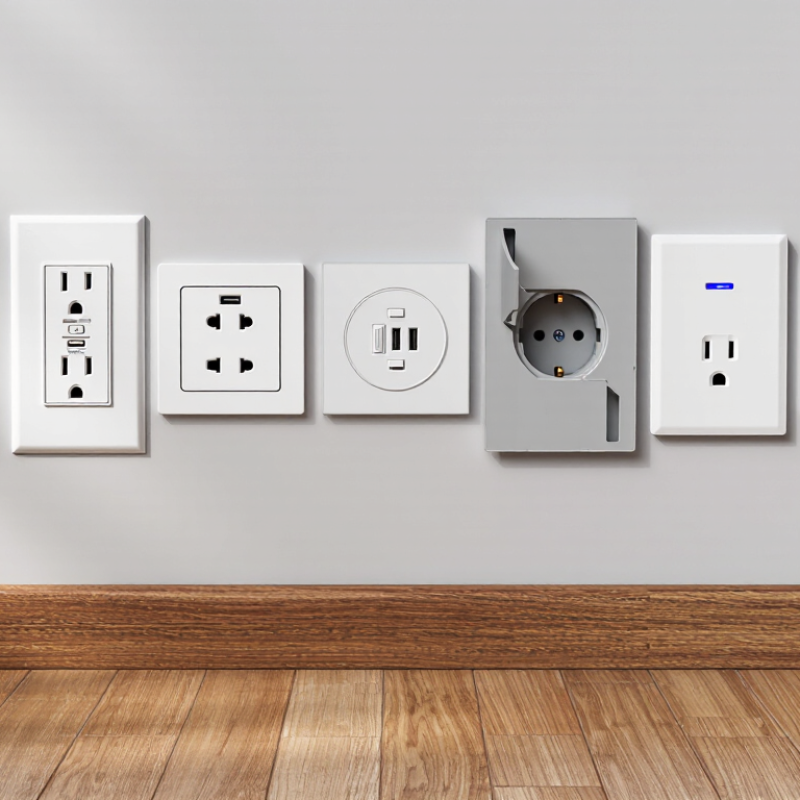
In 2026, standard wall receptacles remain the foundation of residential electrical systems. The most common option is the 15-amp duplex receptacle, while 20-amp versions serve dedicated kitchen, laundry, garage, and workshop circuits. Their two vertical sockets support everyday appliances, lamps, and chargers. Simple, but not always sufficient.
Tamper-resistant receptacles are now expected in many dwelling locations under the 2023 National Electrical Code. Their internal shutters help prevent children from inserting objects into unused slots. Ground-fault circuit-interrupter receptacles remain essential near water, including bathrooms, kitchens, garages, outdoor areas, and unfinished basements. The Electrical Safety Foundation International reports that GFCI protection can prevent severe shock by disconnecting power rapidly during leakage.
Safety data gives this choice practical weight. The National Fire Protection Association reported approximately 32,740 U.S. home fires involving electrical distribution and lighting equipment annually from 2015 to 2019. These fires caused about 470 civilian deaths and 1,100 injuries. Source: NFPA, Home Fires Involving Electrical Distribution and Lighting Equipment, 2022. The figures are older, but still useful for judging risk.
Weather-resistant receptacles suit damp outdoor locations, while USB-integrated models reduce adapter clutter. However, integrated electronics can age differently from the receptacle itself. That deserves more attention in 2026. Circuit rating, grounding, box depth, and local inspection rules must match the installation. A receptacle can look standard and still be unsuitable. When uncertainty remains, a qualified electrician should verify the circuit before replacement.
| NEMA Configuration | Typical Rating | Grounding | Common Wall Applications | Key Identification | 2026 Selection Notes |
|---|---|---|---|---|---|
| 5-15R | 125 V, 15 A | Grounding type | General-purpose lighting and receptacle circuits in homes, offices, and light commercial spaces | Two vertical slots and a U-shaped grounding opening | The most common standard 125-volt wall receptacle configuration; tamper-resistant versions are commonly required in specified dwelling locations. |
| 5-20R | 125 V, 20 A | Grounding type | Kitchen, laundry, workshop, garage, countertop, and other higher-load 125-volt circuits | One vertical slot and one T-shaped slot, plus a grounding opening | Accepts both 15-amp and 20-amp straight-blade plugs; circuit conductor and overcurrent protection must match the installation. |
| 6-15R | 250 V, 15 A | Grounding type | Dedicated 250-volt circuits for selected tools, equipment, and appliances | Two horizontal slots and a grounding opening | Use only where the equipment plug, circuit voltage, and circuit rating are compatible. |
| 6-20R | 250 V, 20 A | Grounding type | Dedicated circuits for larger tools, heating equipment, and other 250-volt loads | One horizontal slot and one T-shaped slot, plus a grounding opening | The T-slot prevents connection of equipment requiring a different 250-volt configuration. |
| 14-20R | 125/250 V, 20 A | Grounding type with neutral | Specialized four-wire equipment and selected combination-voltage loads | Two angled slots, a neutral slot, and a grounding opening | Less common than 15-amp and 20-amp 125-volt receptacles; install only for equipment designed for this configuration. |
| 14-30R | 125/250 V, 30 A | Grounding type with neutral | Four-wire electric clothes-dryer circuits and other listed equipment requiring 30 amps | Two angled line slots, one neutral slot, and one grounding opening | A four-wire connection separates the neutral and equipment grounding conductors. |
| 14-50R | 125/250 V, 50 A | Grounding type with neutral | Electric ranges, large cooking equipment, and other listed 50-amp loads | Two angled line slots, one neutral slot, and one grounding opening | Requires a properly sized four-wire branch circuit and suitable overcurrent protection. |
| 10-30R | 125/250 V, 30 A | Non-grounding, three-wire legacy type | Existing older dryer installations where permitted by applicable rules | Two angled line slots and one L-shaped neutral slot; no separate grounding opening | Generally not used for new installations where a four-wire grounding connection is required. |
| 10-50R | 125/250 V, 50 A | Non-grounding, three-wire legacy type | Existing older range or cooking-equipment installations where permitted | Two angled line slots and one neutral slot; no separate grounding opening | Not the preferred configuration for new work when a separate equipment grounding conductor is required. |
Note: Receptacle availability, GFCI and AFCI protection, tamper-resistance requirements, box fill, conductor sizing, and permitted legacy replacements depend on the applicable electrical code and local authority. Always match the receptacle configuration to the circuit and equipment rating.
It powers ordinary devices in bedrooms, living rooms, and hallways. Two sockets share one wall plate. Its suitability still depends on circuit capacity and local requirements.
They suit homes where young children may reach the wall. Internal shutters block many foreign objects. They are helpful, but supervision still matters.
Use them near sinks, bathrooms, laundry areas, garages, and exterior walls. They detect current imbalance and cut power quickly. Moisture changes the risk.
They detect dangerous arcing from damaged cords, loose connections, or crushed insulation. This protection targets fire risks, not water-related shock risks. Different hazard. Different device.
They can charge phones and tablets beside a backsplash. They should not replace dedicated circuits for high-power appliances. A toaster needs more than convenience charging.
Plan around sofas, tables, rugs, and cleaning tools. A poorly placed outlet may become hidden or easily damaged. Floor access matters.
They can schedule lamps, chargers, and selected appliances. Use secure network settings and correct installation. Convenience is not a safety guarantee.
Weather-resistant designs should include suitable protective covers. The outlet must match moisture, dust, and temperature conditions. A sturdy appearance proves little.
Test it monthly using the device’s test button. The reset button should restore power afterward. If it fails, stop using it and request professional inspection.
Yes. Loose wiring, missing grounding, damaged cords, or overloaded circuits can create danger. A new faceplate cannot correct hidden defects. That assumption is easy to make, and easy to regret.
In 2026, Wall Receptacle Outlet options are designed to meet a wide range of residential needs, from standard grounded outlets for everyday appliances to specialized configurations for kitchens, bathrooms, workshops, and outdoor areas. Their designs vary by function and location, with attention to load requirements, installation depth, environmental exposure, and ease of access. Modern receptacles also emphasize safety through grounding, tamper resistance, moisture protection, overload awareness, and improved connection stability.
Beyond traditional outlets, homeowners can choose smart receptacles, USB charging outlets, combination units, and other specialized solutions that support connected living and reduce the need for extra adapters. Selecting the right outlet requires evaluating the room’s purpose, expected electrical demand, device compatibility, mounting conditions, and local installation requirements. By matching each Wall Receptacle Outlet to its intended environment, users can achieve a safer, more convenient, and better-organized electrical system.

 Huaya Electric