How to Choose the Best Wall USB Outlet for Global Buyers?

Time:2026-09-07 Author:Madeline
0%

Choosing the right Wall Usb Outlet requires more than comparing USB ports and retail prices. Global buyers must examine voltage ratings, frequency compatibility, plug configurations, grounding, and installation requirements. A model designed for one region may not suit another country’s wiring system. Always verify technical documents and regional certification marks before making a purchase.

Practical testing reveals important details. A reliable outlet should deliver stable charging for phones, tablets, and laptops without excessive heat. USB-C Power Delivery can improve charging speed, but its output must match the connected device. USB-A ports remain useful for older cables. Safety shutters, overload protection, short-circuit protection, and flame-resistant materials also deserve close attention. Small details matter.

Supplier credibility matters too. Request test reports, wiring diagrams, rated-load information, warranty terms, and sample units. Check whether the manufacturer explains installation clearly and responds with specific technical answers. Experienced buyers often test an outlet under realistic conditions, such as charging two devices beside a kitchen counter or hotel desk. Performance can change under heat and continuous load.

There is no universal “best” outlet. The ideal choice depends on the destination market, wall-box depth, user habits, and project budget. Some attractive models perform poorly with thick wall plates. Others offer excellent charging but lack suitable regional approval. That can become an expensive mistake. A careful comparison helps buyers balance safety, convenience, appearance, and long-term reliability.
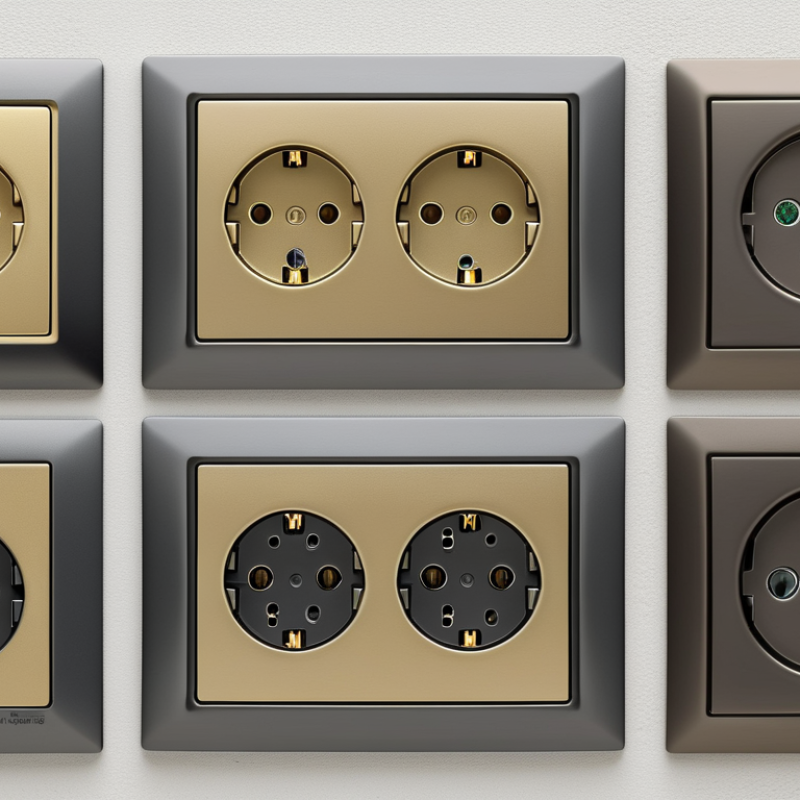
How to Choose the Best Wall USB Outlet for Global Buyers?

What Is a Wall USB Outlet and Why Does It Matter Globally?

A wall USB outlet combines a standard power socket with built-in USB charging ports. It replaces loose adapters and reduces cable clutter beside beds, desks, and kitchen counters. For global buyers, this small fixture matters because electrical systems differ across countries. Voltage, frequency, plug shapes, and installation boxes are not universally identical. A suitable outlet must match the destination’s wiring system, not just the buyer’s device.

USB-C ports can support faster charging, but performance depends on power delivery and the total output. Two connected devices may share available power. That detail is easy to miss. A practical evaluation should check rated voltage, USB output, grounding, overload protection, and heat control. Safety testing from recognized authorities adds confidence, although certification markings still require verification. An attractive faceplate means little if the terminals are weak or poorly fitted.

Global buyers should also consider local installation depth and wall-box dimensions. Moisture-prone rooms need appropriate protection, while dusty areas may require stronger enclosure design. I would not assume one outlet suits every market. Even a correct product can fail through incorrect wiring or unsuitable adapters. Clear instructions, traceable technical documents, and responsive after-sales support improve reliability. Buyers sometimes focus on charging speed and overlook nighttime heat, child safety shutters, or repeated daily use. That choice may look efficient, but it deserves another review.

Which USB Ports and Charging Standards Should You Choose?

Choosing a wall USB outlet starts with the devices you actually charge. USB-C should be the main port for newer phones, tablets, and compact laptops. It supports faster charging and uses a smaller, reversible connector. USB-A still helps when guests bring older cables. However, too many USB-A ports may limit future use.

Check the charging standard, not only the wattage printed on the package. USB Power Delivery can adjust voltage safely for compatible devices. PPS may improve charging efficiency for supported phones.

A 20W USB-C port suits phones, while 30W to 65W works better for tablets and small laptops. More power is not always better. The device controls its actual intake, but poor-quality electronics can still create heat.

I once chose ports by appearance and regretted ignoring the power specification.

Tips: Count your daily devices first. Choose at least one USB-C PD port. Keep one USB-A port for older cables.

Check whether total output is shared between ports. Two ports marked 30W may deliver less when used together. Confirm the outlet’s voltage range, grounding, plug design, and recognized safety testing for your destination.

Installation depth matters too. A deep module may not fit an older wall box. Ask an electrician when wiring conditions are unclear. Specs can look convincing, yet compatibility still needs checking.

How to Check Voltage, Frequency, and Safety Compatibility

How to Choose the Best Wall USB Outlet for Global Buyers?

How to Check Voltage, Frequency, and Safety Compatibility

Choosing a wall USB outlet for global use starts with the building supply, not the charging port. Check the local nominal voltage, such as 120 V or 230 V. Confirm the outlet’s rated input range. Frequency matters too. Some products accept 50/60 Hz, while others support only one frequency. Compare the label with local electrical requirements and the circuit breaker rating. A universal-looking faceplate proves nothing. Keep the installation manual.

Inspect USB output details separately. USB-C Power Delivery can change voltage during charging. Check the maximum output and total wattage when several ports operate together. Look for overcurrent, overtemperature, short-circuit, and surge protection. Reliable documentation should show required conformity markings, test information, and a responsible manufacturer address. Avoid vague claims like “worldwide safe.” The paperwork matters more.

Physical compatibility is equally important. Measure wall-box depth, screw spacing, plate size, and terminal layout. Confirm the need for live, neutral, and ground wires. Some older homes lack a ground connection. Do not guess. Turn off the circuit, then ask a qualified electrician to verify it with an approved tester. A socket can fit perfectly and remain electrically unsuitable. I would also check heat after extended charging, although this step is often skipped. Recheck voltage, frequency, and certification before ordering. A small label can prevent an expensive mistake.

How to Choose the Best Wall USB Outlet for Global Buyers?

Compare the representative nominal mains voltage and frequency in major markets before selecting a wall USB outlet. A globally compatible model should typically support 100–240 V AC and 50/60 Hz, while local plug and safety certification requirements must also be verified.

How to read this chart: The bars show nominal household voltage, while the line shows grid frequency. Japan uses 100 V, with 50 Hz in eastern regions and 60 Hz in western regions. Actual requirements may vary by country, building, or installation, so always check the local electrical standard before purchase.

What Features Improve Convenience, Durability, and Installation?

How to Choose the Best Wall USB Outlet for Global Buyers?

A dependable wall USB outlet should match both your devices and your local electrical system. Check the outlet’s input range, such as 100–240V, before buying for international use. Voltage compatibility matters. USB-C Power Delivery can charge phones, tablets, and some laptops faster than standard USB-A ports. However, higher wattage does not always mean better performance. Confirm the charger’s output profile and your device requirements.

Convenience also depends on small physical details. A front-facing USB-C port is easier to reach behind a desk or bedside table. Look for clear power indicators, firm socket contacts, and a design that leaves room for large plugs. Safety shutters, overcurrent protection, overheating control, and surge resistance can improve daily reliability. A flame-retardant housing is useful near warm or crowded electrical boxes. Avoid models with vague ratings or unclear testing information.

Installation needs equal attention. Measure the wall box depth, wire layout, and mounting screw position before ordering. Some outlets need a neutral wire, while older homes may not have one. Local socket shapes and grounding methods also differ across countries. A qualified electrician should verify compatibility with regional requirements. This step may feel excessive, but a neat-looking outlet can still be unsuitable. I would also inspect the USB port after repeated charging, because loose connections and heat often reveal weaknesses that product photos hide.

How to Compare Certifications, Suppliers, Pricing, and Warranty Terms

For global buyers, certification should come before price. Check IEC 60884-1 for socket safety and IEC 62368-1 for electronic protection. USB-IF certification can support claims about USB performance, but it does not replace local approval. Market access may also require CE, UKCA, FCC, or other regional marks. Ask suppliers for current certificates, test reports, and model numbers. A logo printed on a carton proves very little.

Supplier comparison needs evidence, not polished photographs. Request factory audit records, production capacity, incoming-material controls, and samples from mass production. Compare landed pricing, not only the unit quotation. Include tooling, testing, packaging, freight, minimum order quantities, and replacement stock. A 10% lower price can disappear after testing delays. I have seen buyers overlook sample revisions; that mistake is expensive.

Warranty terms deserve equal attention. Confirm the coverage period, rated charging cycles, failure definition, response time, and return procedure. Specify who pays freight and whether spare units are supplied. The Global E-waste Monitor 2024 reports 62 million tonnes of electronic waste in 2022, with 82 million tonnes projected by 2030. Longer product life matters. Still, a long warranty may hide weak service capacity. Ask for historical failure rates and claim data, even if suppliers hesitate. Some answers will be incomplete. That is useful information.

How to Choose the Best Wall USB Outlet for Global Buyers? - How to Compare Certifications, Suppliers, Pricing, and Warranty Terms

The comparison below uses anonymous supplier profiles and indicative bulk-purchase benchmarks. Final compliance, pricing, lead time, and warranty conditions should be confirmed in a written quotation and supported by current test reports.

Anonymous Supplier Profile Typical Product Configuration Relevant Certifications and Tests Indicative Bulk Price
(USD / Unit)
Typical MOQ and Lead Time Warranty and After-Sales Terms Best Fit for Global Buyers
Profile A
North American compliance-focused supplier
15A tamper-resistant wall receptacle with two USB-A charging ports; 5V output; indoor residential use. UL 498 UL 1310 FCC Part 15
Verify tamper-resistant requirements, dielectric-strength testing, grounding continuity, temperature-rise testing, and USB overcurrent protection.
$8.50–$15.00
Higher cost is common when North American certification, factory inspection, and traceable test records are included.
MOQ: approximately 500–2,000 units
Lead time: approximately 30–60 days after approval of samples and artwork.
2–5 years is commonly offered for certified commercial products.
Ask whether replacement units, freight, labor, and installation-related claims are included.
United States and Canada projects where recognized safety certification and code acceptance are more important than the lowest unit price.
Profile B
European market compliance-focused supplier
16A wall outlet with dual USB-C or USB-C plus USB-A; 5V–20V USB Power Delivery options; Type E/F or Type G regional variants. CE LVD EMC RoHS IEC 60884-1
CE marking should be supported by a Declaration of Conformity, technical file, applicable safety tests, EMC results, and RoHS evidence.
$7.00–$14.00
USB-C Power Delivery, higher wattage, and multiple socket standards generally increase cost.
MOQ: approximately 300–1,000 units
Lead time: approximately 25–50 days; custom faceplates may add production time.
2–3 years is a reasonable target.
Confirm whether the warranty begins at shipment, delivery, or installation, and request a stated failure-rate threshold.
European Union, European Economic Area, and export projects requiring documented CE compliance and region-specific socket compatibility.
Profile C
High-volume OEM/ODM supplier
Modular wall outlet platform with USB-A, USB-C, or USB-C Power Delivery; custom faceplate colors, socket layouts, and packaging. Compliance depends on the target market. Require market-specific reports rather than relying only on a generic factory certificate.
Typical evidence may include IEC 60884-1, EMC, RoHS, and destination-country safety approvals.
$3.80–$8.50
Usually based on 5,000–20,000 units, standard materials, and limited customization. Certification costs may be quoted separately.
MOQ: approximately 1,000–5,000 units for standard products; higher for custom tooling
Lead time: approximately 35–70 days.
1–2 years is common in price-sensitive OEM programs.
Negotiate spare-unit percentages, defect replacement procedures, inspection rights, and payment holdbacks.
Large distributors, private-label programs, and buyers able to manage independent inspections and destination-market certification.
Profile D
Regional distributor with stocked inventory
Standard single-gang outlet with USB-A or USB-C charging; limited customization; ready-to-ship packaging. Documentation should include a valid test report, product label photographs, electrical ratings, and the applicable national approval for the sales territory. $10.00–$22.00
The price normally includes local inventory, shorter delivery, distributor handling, and easier returns.
MOQ: approximately 10–100 units
Lead time: approximately 2–14 business days when stock is available.
1–3 years is typical.
Confirm return authorization, restocking charges, local service coverage, and whether warranty replacement is handled domestically.
Small projects, urgent maintenance, pilot installations, and buyers who need lower supply-chain risk rather than the lowest factory price.
Profile E
Hospitality and commercial-project supplier
Commercial-grade outlet with USB-C Power Delivery, surge and overtemperature protection, robust terminals, and optional tamper-resistant construction. Request testing for continuous-load performance, thermal rise, surge protection, grounding, flammability, electromagnetic compatibility, and the electrical code applicable to the installation country. $12.00–$28.00
Commercial components, higher-power USB-C modules, enhanced protection, and project documentation increase the price.
MOQ: approximately 100–500 units
Lead time: approximately 30–75 days, depending on project engineering and inspection requirements.
3–5 years may be available for approved projects.
Look for an installation manual, commissioning guidance, serial or batch traceability, and defined on-site support.
Hotels, offices, student accommodation, healthcare facilities, and other projects where reliability and documentation are critical.
Buyer verification checklist: Confirm the outlet's rated voltage and current, socket standard, USB output protocol, grounding method, fire enclosure rating, operating temperature, installation depth, wiring terminals, test-report scope, certificate validity, production-batch traceability, sample approval process, inspection rights, Incoterms, payment schedule, spare-parts policy, and warranty exclusions before placing an order.

FAQS

: What is a wall USB outlet?

: It combines a standard power socket with built-in USB charging ports. It reduces loose adapters and cable clutter near beds, desks, and counters. The outlet becomes part of the wall. Compatibility still matters.

Why must global buyers check electrical compatibility?

Countries use different voltages, frequencies, plug shapes, and grounding methods. Check the outlet’s input range before purchasing. A range such as 100–240V may support wider use. However, the wall box and wiring must also match.

Which USB ports are most useful?

USB-C suits newer phones, tablets, and some compact laptops. USB-A remains useful for older charging cables. Choose at least one USB-C port. Keep one USB-A port for guests or older devices.

How much charging power is enough?

A 20W USB-C port usually suits phones. Tablets and small laptops may need 30W to 65W. More power is not automatically better. The device controls its actual intake.

Does the printed wattage guarantee charging performance?

No. Check the charging profile and total output. Two ports may share available power when used together. Two ports marked 30W may deliver less simultaneously. The label can mislead.

What safety features should buyers inspect?

Look for overcurrent protection, overheating control, and surge resistance. Safety shutters can help protect children from exposed socket openings. A flame-retardant housing may suit crowded electrical boxes. Nighttime heat deserves attention.

How can buyers confirm installation compatibility?

Measure the wall-box depth, wire layout, and screw positions. Some outlets require a neutral wire. Older homes may not have one. Ask a qualified electrician when wiring conditions remain unclear.

What physical details improve daily convenience?

A front-facing USB-C port is easier to reach behind furniture. Firm socket contacts help prevent loose plugs. Leave enough space for large power adapters. Clear indicators can help, though they are not essential.

How can buyers judge long-term durability?

Inspect technical documents, testing information, and installation instructions. Check the USB port after repeated charging. Loose connections and excess heat may reveal hidden weaknesses. Product photos cannot show everything. I would review the choice again.

Conclusion

Choosing the right Wall Usb Outlet for global buyers requires more than comparing appearance and price. Start by identifying the required USB ports, such as USB-A, USB-C, or a combination, and confirm whether fast-charging standards match the intended devices. Buyers should also verify voltage, frequency, grounding, and plug compatibility for the destination market. Built-in overload, short-circuit, surge, and temperature protection can improve safety and reliability across different electrical environments.

Convenience and durability are equally important. Consider features such as intelligent power distribution, night indicators, child protection, secure terminals, heat-resistant materials, and an installation design suitable for professional or residential use. When evaluating suppliers, review product certifications accepted in the target countries, quality-control procedures, production capacity, sample policies, and communication efficiency. A complete comparison should also include unit pricing, minimum order quantities, shipping terms, warranty coverage, replacement procedures, and after-sales support. This structured approach helps global buyers select a dependable Wall Usb Outlet that balances performance, compliance, installation needs, and long-term value.


Madeline

Madeline

Madeline is a dedicated marketing professional with a wealth of expertise in our company's core offerings. With a keen understanding of the industry, she brings a unique perspective to her role, consistently delivering high-quality content that highlights the superior aspects of our products. As......