Top 10 Electric Wall Socket Manufacturers for Global Buyers

Time:2026-11-11 Author:Amelia
0%

Choosing an Electric Wall Socket manufacturer requires more than comparing prices or browsing polished catalogs. Buyers need products that fit local wiring systems, installation practices, and project demands. A socket may look sturdy on a screen, yet its terminal design, contact material, or housing quality can affect performance after installation. Small details matter.

This guide introduces ten manufacturers serving international buyers, from established electrical brands to suppliers with focused product ranges. It considers practical factors such as product variety, documented testing, manufacturing experience, customization, and export support. Buyers should also check technical specifications, applicable certifications, and compatibility with their destination market before placing an order. Requirements vary. A familiar brand name alone does not confirm that a particular model suits every project.

The comparison is intended as a starting point, not a universal verdict. A supplier with broad production capacity may suit a large construction order, while another may offer better flexibility for smaller batches. Ask for current datasheets and samples when possible. Examine the socket’s finish, mounting dimensions, and connection points—not just its product image. No list can capture every buyer’s priorities, and some information changes over time. That deserves a second look. By weighing verified product details against your own installation and sourcing needs, you can create a more reliable shortlist and ask manufacturers better questions.
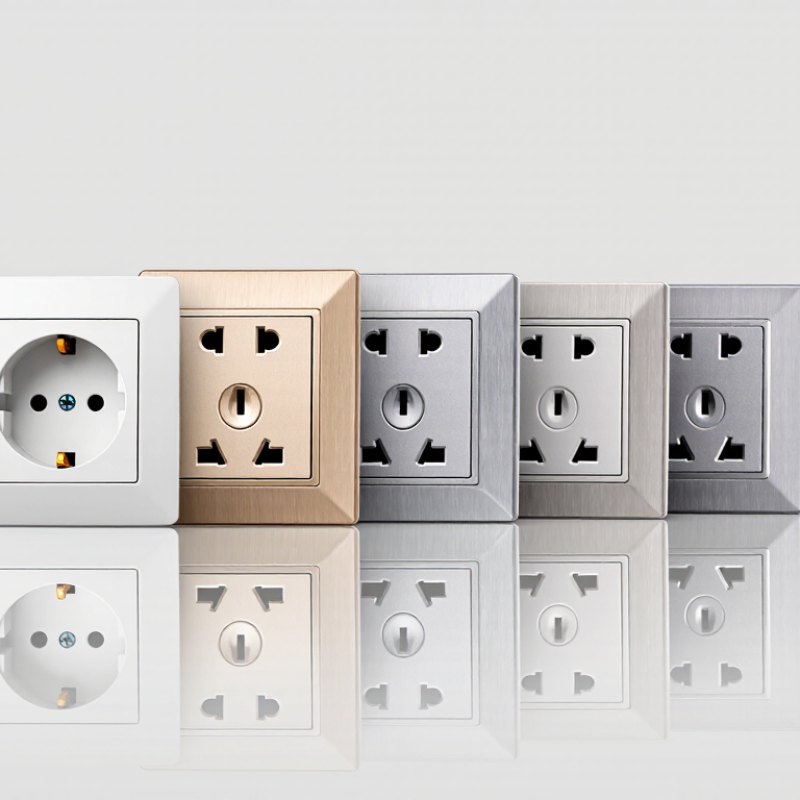
Top 10 Electric Wall Socket Manufacturers for Global Buyers

How Electric Wall Socket Manufacturers Serve Global Markets

Electric wall socket manufacturers serve global buyers by adapting products to local installation needs. A socket designed for one market may not fit another country’s plug shape, rated current, or mounting box. Experienced suppliers confirm these details before production and provide drawings, material specifications, and sample units for review. Small differences matter. A few millimeters can affect fit.

Export service also depends on clear documentation and steady quality checks. Buyers may need product labels, wiring diagrams, test records, and manuals in suitable languages. Reliable manufacturers track batches and inspect contact pressure, insulation, and terminal security. They also discuss packaging that protects sockets from moisture and impact during long transit. Still, forecasts can be wrong, and even a careful supplier may face delays. Buyers should ask how changes are communicated, not assume every shipment will run perfectly.

Tips: Send a photo and measurements of the intended wall box. Confirm local technical requirements with a qualified professional before ordering. Request a pre-shipment sample, and check its markings and fit in person.

Key Criteria for Evaluating International Socket Manufacturers

When comparing electric wall socket manufacturers, buyers should look beyond unit price and catalog photos. Ask for material specifications, rated voltage and current, contact resistance, and temperature-rise test results. These details help assess performance under repeated use, not just during a showroom inspection. Check whether test reports identify the exact product model and production site. A certificate for a similar-looking socket may not cover the item being purchased.

Quality control should be visible in the process. Request sample inspection records, batch traceability, and details about checks for terminal tightness, insulation, and mechanical strength. For international orders, confirm that the manufacturer can provide documentation relevant to the destination market and explain how product changes are controlled. Small production differences can matter. A loose terminal screw or uneven faceplate fit may create problems during installation, even when the product looks polished.

Also assess practical communication: Are technical questions answered clearly, and can the factory share realistic lead times? Ask how defects are handled and whether replacement parts are available. Test it twice. A sample review is useful, but it cannot prove every batch will match. I would still compare incoming goods against agreed specifications, especially for large orders. No supplier process is perfect; transparent records make shortcomings easier to identify and correct.

Profiles of Ten Leading Electric Wall Socket Manufacturers

Manufacturer 1 focuses on high-volume standard sockets, with consistent molding and clear product documentation. Manufacturer 2 offers modular designs for residential projects, where matching plates and inserts can simplify installation. Manufacturer 3 specializes in industrial outlets, using robust housings suited to demanding environments. Manufacturer 4 serves renovation markets with compact formats that fit shallow wall boxes. Details matter.

Manufacturer 5 emphasizes child-resistant shutters and clear terminal markings. Manufacturer 6 supplies weather-resistant sockets for covered outdoor areas, though buyers should verify the stated protection level for each model. Manufacturer 7 provides custom colors and finishes for hospitality interiors. Manufacturer 8 concentrates on export packaging and multilingual installation guides, useful when products pass through several distributors. A polished catalog is not enough.

Manufacturer 9 develops connected socket options alongside conventional models, so compatibility and standby behavior deserve close review. Manufacturer 10 focuses on cost-conscious ranges for large projects, where batch consistency can matter more than decorative choices. These profiles reflect different production priorities, not a ranking. Buyers can compare rated current, terminal design, material specifications, test records, and sample quality before selecting a supplier. A loose terminal screw or poorly aligned faceplate can reveal more than a brochure. Ask for traceable test documentation and inspect the exact configuration being purchased.

Product Types, Safety Standards, and Regional Differences

Electric wall sockets are not interchangeable, even when their faceplates look alike. Buyers compare grounded and ungrounded receptacles, shuttered designs, weather-resistant models, and sockets with USB charging. Plug shape is only one clue. Check rated voltage, current, frequency, terminal design, and installation depth for the destination market. That last measurement is easy to overlook.

Safety requirements vary by country and product category. IEC 60884-1 is a useful reference for household plugs and socket-outlets, but local rules may add requirements or adopt different editions. A certificate should match the exact model and intended market. Ask for test reports, certification details, and clear instructions covering wiring and compatible conductors. Not always obvious. A neat label alone does not establish suitability.

Regional differences affect both fit and use. Type G sockets, for example, have a different pin layout from Type A or Type I designs, while voltage and frequency also vary. Buyers should confirm local requirements with qualified installers and check whether grounding, shutters, or ingress protection are needed. One imperfect shortcut is choosing by plug shape alone; it can miss mounting depth or terminal compatibility. Measure the wall box, inspect the wiring diagram, and verify the ratings before ordering samples.

How Global Buyers Can Compare Suppliers and Choose a Manufacturer

Choosing an electric wall socket manufacturer takes more than comparing unit prices. Ask suppliers for rated voltage, current, terminal type, and supported wire sizes. Check whether these details match your product requirements and destination market. Request recent test reports, material specifications, and production quality records. Clear answers matter. Vague claims about safety or durability deserve follow-up questions.

A capable supplier should explain how sockets are tested, from terminal temperature rise to plug retention and endurance. Ask how often samples are inspected and how production changes are documented. Compare lead times, minimum order quantities, packaging, and response times in writing. A sample can look excellent yet differ from bulk production. Request samples from a normal production run when possible, and review them with a qualified technical team. No spreadsheet captures everything.

Tips: Compare like with like. Check dimensions, mounting depth, terminal access, and labeling on physical samples. Keep a record of unanswered questions; even one unclear detail may affect installation or long-term reliability.

Top 10 Electric Wall Socket Manufacturers for Global Buyers - How Global Buyers Can Compare Suppliers and Choose a Manufacturer

No. Comparison Factor What Buyers Should Compare Documentation to Request
1 Destination-market compliance Confirm that the socket design, ratings, configuration, and approvals meet the electrical regulations applicable in each sales market. Requirements can differ by country and product type. Applicable test reports, certificates, product markings, and a list of the models and markets covered by each approval.
2 Product safety standards Check which standards apply to the specific product. IEC 60884-1 covers plugs and socket-outlets for household and similar purposes; IEC 60669-1 covers switches for household and similar fixed electrical installations. Current test reports identifying the standard edition, tested model, ratings, and any applicable national deviations.
3 Electrical ratings and compatibility Compare rated voltage, current, frequency, terminal design, and plug/socket configuration against the destination market and intended installation. Datasheets, dimensioned drawings, wiring diagrams, and clearly marked product samples.
4 Ingress protection and intended location For products intended for locations exposed to dust or water, verify the declared IP rating and confirm that the tested configuration matches the supplied product. IEC 60529 defines the IP Code classification system. Test report stating the IP rating, test configuration, and any conditions or limitations of use.
5 Materials and construction Evaluate housing materials, contact materials, terminal construction, shutter or child-protection features where required, and suitability for the stated operating environment. Bill of materials, material specifications, construction details, and relevant safety or material test reports.
6 Quality management Assess whether the supplier has a documented quality system and whether it is appropriate to the manufacturing scope. ISO 9001 specifies requirements for quality management systems; certification alone does not establish product compliance. Current certificate, certification body's details, scope, site address, and independent certificate verification.
7 Production capability and capacity Compare the supplier's actual production processes, available capacity, production lead times, and ability to maintain consistent output for the required product range. Factory profile, process flow, capacity details, production schedule, and a sample order plan.
8 Product testing and traceability Check how incoming materials, in-process production, and finished products are inspected, and whether batches can be traced to production records. Inspection and test plans, sample quality records, batch or date-code examples, and corrective-action procedures.
9 Customization and documentation Compare the supplier's ability to support required colors, finishes, packaging, labeling, language, and technical documentation without changing approved product configurations. Approved drawings, artwork proofs, labeling samples, change-control process, and confirmation of any approval impact.
10 Commercial and delivery terms Compare quotation validity, minimum order quantities, tooling charges, payment terms, production lead time, shipping terms, warranty conditions, and after-sales support. Itemized quotation, agreed delivery schedule, written warranty terms, packaging specification, and clearly stated Incoterms® rule and version.

Use this checklist to compare shortlisted manufacturers rather than as a ranking of specific companies. Verify all certificates, test reports, product claims, and market requirements independently before placing an order.

FAQS

Why might a wall socket from one market not fit another?

Plug shapes, rated current, and wall-box dimensions can differ. Even a few millimeters may affect fit.

What details should buyers share before ordering?

Send the wall-box photo and measurements. Confirm plug type, rated current, mounting depth, and local requirements with a qualified professional.

What documents should a supplier provide?

Ask for wiring diagrams, product labels, manuals, material details, and test records. Suitable language matters.

How can buyers check product quality?

Request a pre-shipment sample. Check terminal security, contact pressure, insulation, markings, and faceplate alignment in person.

What should buyers confirm about outdoor sockets?

Verify the stated protection level for the exact model. “Weather-resistant” alone is not enough.

How can buyers reduce damage during long shipping?

Discuss packaging that protects sockets from moisture and impact. Ask how shipment changes or delays will be reported.

What features suit different projects?

Modular designs may simplify matching plates and inserts. Industrial projects may need robust housings, while shallow boxes may require compact formats.

Is a polished catalog enough to choose a supplier?

No. Compare specifications, batch consistency, and traceable test records. A brochure can look reassuring, but the sample tells more.

What deserves extra review in connected socket models?

Check compatibility and standby behavior. These details are easy to overlook. Even careful planning can miss something.

Conclusion

This article explores how Electric Wall Socket manufacturers support buyers across international markets, from product development and customization to export readiness and after-sales service. It explains the key factors for evaluating suppliers, including manufacturing capacity, quality control, product documentation, communication, delivery reliability, and experience serving different regions. The article also profiles ten leading manufacturers in general terms, focusing on their capabilities and the types of buyers they may serve rather than promoting specific brands.

Readers will learn how socket designs and product requirements can differ by market, and why safety standards, certification needs, installation preferences, and compatibility should be considered early in the sourcing process. The final section offers a practical framework for comparing suppliers, assessing samples and technical information, reviewing production and support processes, and selecting a manufacturer that fits a project’s specifications, budget, and long-term purchasing needs.


Amelia

Amelia

Amelia is a seasoned marketing professional with a wealth of expertise in our company’s core offerings. With an unwavering passion for driving growth and innovation, she plays a pivotal role in shaping our marketing strategies and enhancing brand visibility. A key aspect of her responsibilities......