Wall Plate Cover products may look simple, but their details shape the finish of a room. A well-fitted plate sits flush against the wall, aligns with the switch, and feels smooth at the edges. Small differences matter. Material, color, screw placement, and surface texture can affect both appearance and everyday use. A poor match may stand out beside carefully chosen trim or freshly painted walls.
This guide to China’s top 10 wall plate cover manufacturers introduces companies for buyers comparing product ranges and supplier capabilities. It considers practical factors such as material choices, finish options, customization, production experience, quality-control practices, and communication. These are useful starting points, not guarantees. Buyers should confirm dimensions, samples, packaging, lead times, and relevant product documentation directly with each manufacturer. A catalog photo cannot show every detail. Even a polished sample may not represent every production batch, so clear specifications and follow-up checks are worthwhile.
For importers, distributors, contractors, and project teams, the right supplier depends on the application. A residential renovation may call for familiar colors and steady availability, while a commercial project may require consistent finishes across larger orders. No single manufacturer will suit every brief. This comparison is intended to make the search more informed, while leaving room for a simple but important question: does the actual product meet your project’s needs?
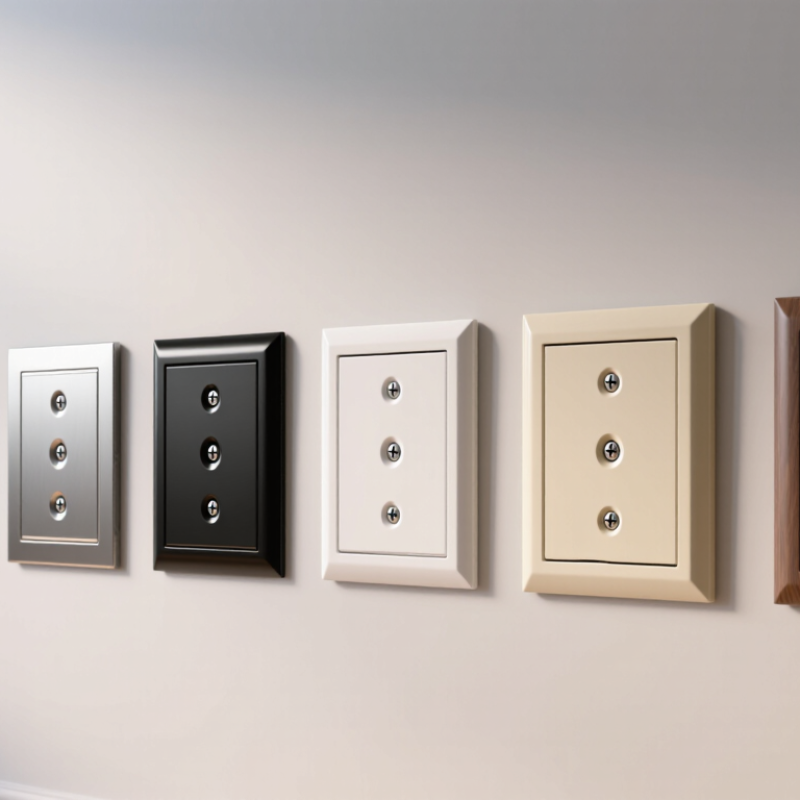
Understanding Wall Plate Covers and Their Applications
China Top 10 Wall Plate Cover Manufacturers
Understanding Wall Plate Covers and Their Applications
Wall plate covers are the visible finishing panels around switches, sockets, and communication ports. They protect wiring access points from dust, accidental contact, and minor wall damage. In homes, offices, hotels, and workshops, they also create a cleaner visual line. A well-fitted cover should sit flat, without sharp edges or uneven gaps.
Material choice depends on the setting. Thermoplastic covers suit bedrooms and living areas because they are lightweight and easy to clean. Metal covers provide a firmer feel and may work well in commercial interiors. Moisture-resistant materials are more practical near kitchens or utility rooms. However, material alone does not guarantee performance. The box depth, screw position, opening size, and wall surface must match.
Installation requires careful measurement. A cover that is only a few millimeters off can expose the edge of the electrical box. That small gap collects dust and looks careless. Covers should be checked for cracks, loose screws, and discoloration during routine maintenance. They should not replace proper electrical enclosures or protective devices. Local electrical requirements also deserve attention.
Practical testing can reveal weaknesses. Press the plate gently after installation. It should not flex or rattle. I have found that appearance often hides poor alignment. A refined product still needs accurate installation, and that part is easy to underestimate.
Wall Plate Cover Configurations by Device Opening
Wall plate covers are selected according to the number and type of electrical, communication, or control devices installed in a wall box. The chart compares common cover configurations by their typical number of device openings; the values describe product configuration rather than market share or company performance.
How Wall Plate Covers Are Designed and Manufactured in China
Wall plate covers begin as drawings, not just decorative shapes. Chinese manufacturers typically translate socket dimensions, screw positions, edge radii, and finish requirements into CAD files. Engineers then make samples to check fit against real switches and outlet boxes. Small details matter. A hole shifted by a few millimeters can make installation awkward.
For volume production, factories commonly use injection-molded plastics such as ABS or polycarbonate. The mold must control wall thickness and cooling, or covers may warp and sit unevenly. Operators inspect color, surface marks, screw-hole alignment, and dimensions; some orders also require heat and flame-performance tests. Requirements vary by destination market, so buyers should specify the applicable test method rather than assume one specification fits all. A glossy sample can still conceal a weak edge or inconsistent molding.
Material efficiency deserves attention. The OECD’s Global Plastics Outlook (2022) reports that global plastics production rose from 234 million tonnes in 2000 to 460 million tonnes in 2019. That figure covers plastics broadly, not wall plate covers, but it gives manufacturers a clear reason to reduce sprues and rejected parts. In practice, recycled content may affect color consistency and impact performance. This trade-off is easy to underestimate, and it needs testing on the finished cover.
Criteria for Evaluating China’s Wall Plate Cover Manufacturers
Evaluating China’s wall plate cover manufacturers requires more than comparing catalog prices. The National Fire Protection Association reports that electrical distribution and lighting equipment caused about 32,000 U.S. home fires annually during its latest study period. This makes material stability, fit, and heat resistance practical purchasing concerns. A reliable supplier should provide traceable batch records, third-party test reports, and clear material specifications for PC, ABS, metal, or other substrates.
Inspect the factory’s tooling and quality controls closely. Measure a sample against common 86 × 86 mm installation boxes, checking screw alignment, corner flatness, and edge burrs. The cover should sit firmly without stressing the switch frame. Ask how the manufacturer controls color variation, injection temperature, and warpage. ISO 9001 certification supports process discipline, but it does not prove every product is consistent. That distinction matters.
Compliance evidence should match the destination market. Useful documentation may include IEC 60669-1 references, applicable Chinese standards, RoHS declarations, and independent flammability testing. Market research from Grand View Research identifies building renovation and electrical safety as continuing drivers of demand for electrical accessories, but market growth can hide weak suppliers. A polished sample can mislead. Request samples from several production batches, not only a hand-selected piece. Factory audits should also review worker training, final inspection records, packaging drop tests, and corrective-action history. Some manufacturers document everything beautifully, yet overlook small defects at the screw hole. That is where experience still counts.
Profiles of 10 Leading Wall Plate Cover Manufacturers in China
China Top 10 Wall Plate Cover Manufacturers
China’s wall plate cover sector serves residential, commercial, and industrial electrical projects. Grand View Research reports that the global electrical equipment market continues to expand through construction renovation and smart-home adoption. This trend increases demand for precise, durable, and compatible covers.
The ten manufacturer profiles focus on practical strengths rather than promotional claims.
Profile One specializes in stamped metal plates for hospitals and offices.
Profile Two produces flame-retardant thermoplastic covers with clean edges.
Profile Three combines injection molding with rapid tooling.
Profile Four focuses on custom colors and embossed markings.
Profile Five supplies moisture-resistant plates for kitchens and utility rooms.
Profile Six develops modular designs for data, audio, and power outlets.
Profile Seven emphasizes high-volume automation.
Profile Eight serves small-batch projects with flexible engineering support.
Profile Nine offers brushed finishes for hospitality interiors.
Profile Ten focuses on export documentation and inspection control.
Details matter here. A reliable supplier should verify dimensions, screw alignment, surface treatment, impact resistance, and material consistency. IEC 60670-1 provides a useful reference for box and enclosure accessories, while RoHS requirements help control restricted substances. The International Trade Centre’s trade data also shows China remains a major global supplier of electrical equipment, although product categories can be broad and imperfectly separated. That limitation deserves attention.
Factory audits should include mold maintenance, incoming-material records, and final sampling. Certificates alone are not enough. A low price may hide weak plating or unstable plastic shrinkage. That is where careful buyers still need to ask harder questions.
Product Quality, Customization, and Export Considerations
China Top 10 Wall Plate Cover Manufacturers
Selecting among China’s top wall plate cover manufacturers requires more than comparing catalog prices. Inspect the material first. Fire-rated polycarbonate, stainless steel, and treated aluminum offer different levels of strength and heat resistance. A reliable factory should provide test reports, dimensional drawings, and sample approval before mass production. Check the surface closely. Clean edges matter.
Customization often includes color matching, logos, screw placement, plate thickness, and packaging design. Ask whether the manufacturer uses dedicated molds or modifies existing tooling. This affects both cost and delivery time. For large projects, request a pilot batch with several socket configurations. It may expose small alignment problems early. Some suppliers promise full flexibility, but their actual tooling range can be narrow.
Export planning needs practical verification. Confirm carton strength, moisture protection, labeling, and pallet requirements for your destination market. Electrical dimensions and installation standards may differ between regions, so technical compatibility must be checked before ordering. Discuss production capacity during peak seasons, not only during quotation. A factory may produce excellent samples yet struggle with consistent color across thousands of units. That risk deserves attention. Request inspection records, production photos, and a clear procedure for handling defective pieces. Even careful suppliers can miss minor scratches. The important point is whether they respond quickly and correct the process.
Conclusion
This article presents a practical overview of the Wall Plate Cover industry in China, explaining the role of wall plate covers in residential, commercial, and industrial electrical installations. It examines common materials, structural designs, surface finishes, safety considerations, and the manufacturing process, from mold development and stamping or injection molding to assembly, inspection, and packaging. Readers will also learn how different designs support switches, sockets, data connections, and customized interior applications.
The article introduces ten leading categories of Chinese manufacturers without focusing on brand names, highlighting how they differ in production capacity, engineering expertise, quality control, customization services, and export experience. It also provides useful criteria for evaluating suppliers, including material consistency, dimensional accuracy, certification support, order flexibility, communication, lead times, and after-sales service. Finally, it discusses important considerations for international buyers, such as sample approval, packaging requirements, documentation, shipping coordination, and compliance with the destination market’s applicable standards.

 Huaya Electric